
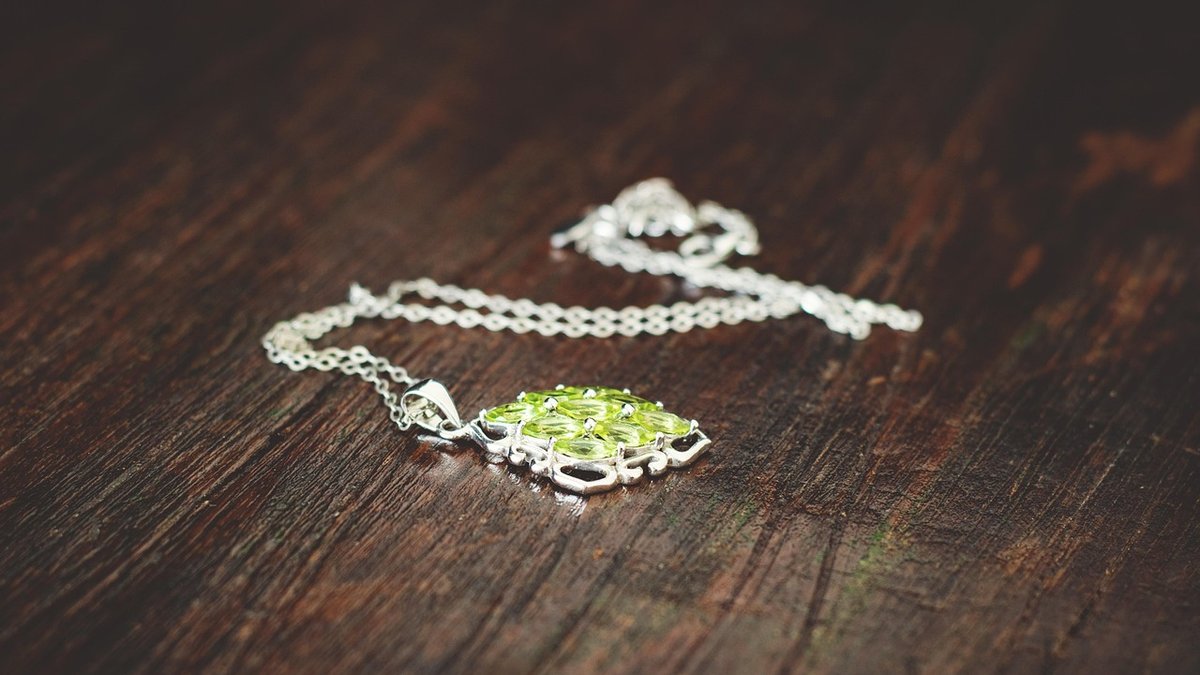
A good brooch does something no other piece of jewellery quite manages. It sits on the surface of what you are wearing, holding its own shape, catching light in a way that earrings and necklaces simply cannot. Vintage examples bring something extra: a maker who trained by hand, stones cut decades before anyone thought of mass-producing a look, and a design language that has fallen out of fashion and come back round again.
Buying them is not difficult, but it rewards a little knowledge. A brooch is a mechanical object as much as a decorative one, and the parts that fail are almost always hidden on the reverse. Learn what to check before you part with your money and you will build a collection that lasts.
If you are browsing a fair, a charity shop or a market stall, a few small items in your bag make a real difference:
Ask politely before handling anything, and always set a piece down on a cloth rather than a glass counter.
Turn every brooch over first. The catch, the hinge and the pin stem tell you more about condition than the front ever will.
An older C-clasp should still close with a firm, positive snap; if it is loose or the curve has been bent open, the brooch may drop off your lapel. A roller catch should rotate smoothly and hold the pin under tension. A trombone catch, the sliding tube found on finer Victorian and Edwardian pieces, should slide without grinding and lock in place. Test each one several times.
Now look at the pin stem itself. It should be straight, tapering evenly to a sharp point, and it should sit roughly parallel to the back of the brooch. A stem that is bent, kinked, or shorter than the body suggests a repair or a replacement. Look at the hinge too: a wobbly joint means the pin is working loose, and that is a job for a jeweller, not a pair of household pliers.
British hallmarks are your best friend here. A genuine sterling piece will usually carry the lion passant, an assay office mark — the anchor for Birmingham, the leopard's head for London, the rose for Sheffield — and a date letter. 9ct gold is marked 375, 18ct is 750, and sterling silver is 925 or bears the lion. These marks are struck, not printed, so they should be crisp and slightly indented.
Plenty of charming brooches carry no hallmark at all. Mid-century costume pieces are often made from base metal, brass or rolled gold, and that is perfectly fine — just price them accordingly. Be wary of green or black corrosion on the backplate, which usually means base metal underneath a thin plating. A little patina on silver is desirable; a crust of verdigris is not.
Check the reverse for signs of clumsy repair: blobs of solder, uneven discolouration around a joint, or a replacement pin that does not match the finish of the rest of the piece.
Light surface wear is completely normal and, to many collectors, part of the charm. Fine scratches on metal, slight dulling of a rhinestone, a hint of oxidation in the recesses — none of these should put you off.
What you should walk away from:
Run a fingertip gently around each setting. If a stone moves, it will need attention before you can wear it with confidence.
Brooches have shaken off their fusty reputation, and the rules are looser than you might think. A single well-chosen piece on a wool coat lapel is the classic move, but try it higher, near the collar bone, for a more modern line.
Pin a small brooch to the shoulder of a chunky knit, or cluster three of varying sizes on a beret. Thread a ribbon through the pin and wear a larger piece as a choker. Use one to secure a silk scarf at the throat, or attach a modest brooch to a plain leather bag strap for an instant, personal touch.
Do think about weight. Heavy brooches pull at fine fabrics, so back the pin with a small square of felt to protect the weave, and choose lighter pieces for silks and chiffons. Group by metal tone rather than by era — a brass leaf beside a silver bow rarely sits comfortably.
Finally, store brooches fastened or in a soft pouch, away from damp. Give them a gentle wipe with a dry cloth after wearing, never a dip in water, and they will keep their character for another fifty years.

Hi, my name is Anthony kuber. I am artist and fashion designer.
I love to travel and writing blogging.
Your email address will not be published. Required fields are marked *
Software Developer & Writer
Hey, I'm Diva, a developer and writer blending code and creativity. I'm driven by a deep curiosity and a relentless pursuit of excellence. Join me as I craft digital solutions and captivating stories.


