
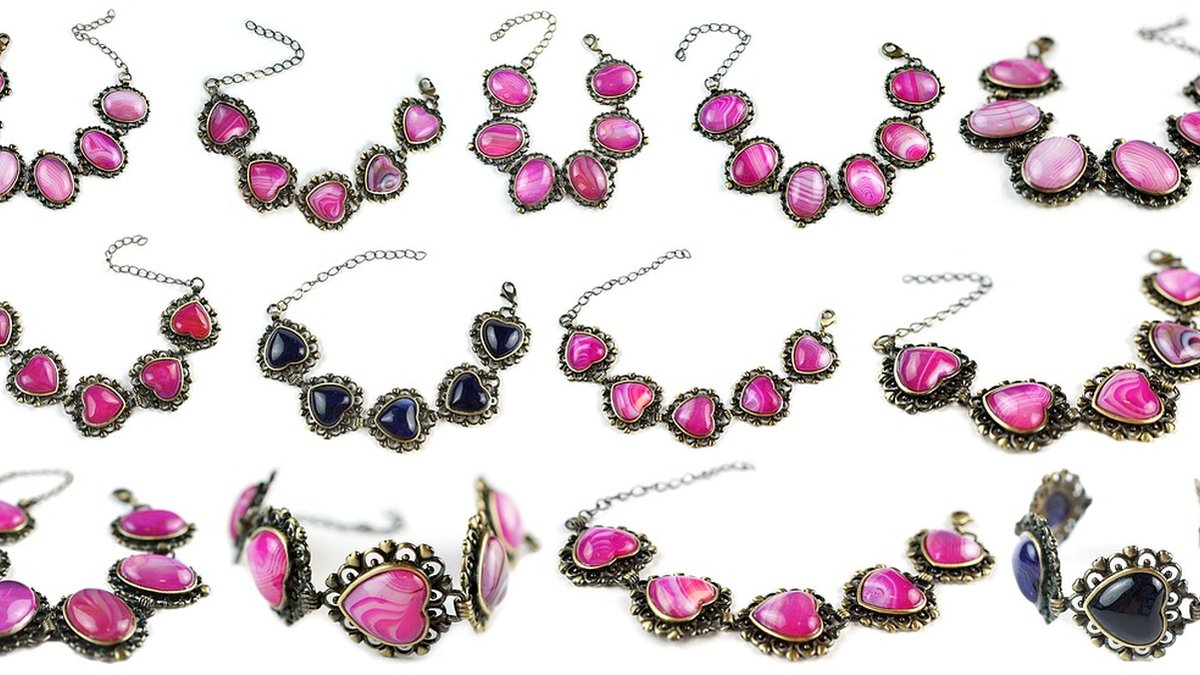
Most of us have bought a gemstone because we loved it under shop lights, only to find it sits oddly against our skin at home. The stone hasn't changed; the light has. What makes a gemstone flatter you is not its colour in isolation but how that colour interacts with your undertone — the quiet warmth or coolness beneath the surface of your skin.
Your surface colour shifts all year. You might tan in July, go pink in the cold, or pale indoors. Your undertone stays put. Because gemstones are worn close to the face and hands, they act like a reflector held up to your skin. A warm stone against a cool complexion can look slightly grey or murky; the same stone against warm skin seems to glow. Knowing your undertone turns guesswork into something far more reliable.
Before you fall in love with a particular cut or setting, do a quick check. Stand by a window in daylight — never under a warm bulb, and never in a changing room with spotlights angled at the mirror.
If you sit between categories, don't worry. Plenty of people are neutral, and that is a gift rather than a limitation.
Warm complexions tend to light up alongside honeyed, sunlit colours. Amber, citrine, honey topaz, tiger's eye, garnet, coral, carnelian and warm smoky quartz are natural allies. They echo the golden cast of your skin instead of fighting it, so the stone looks richer and you look healthier.
Pair them with yellow or rose gold, brass, or bronze-toned settings. If you love silver, look for a warm-toned stone to bridge the gap. One caution: extremely pale, icy blues and greys can drain a warm complexion, especially in large faceted pieces. If you want a blue, choose a teal or a green-blue with some depth, and keep the setting warm. A citrine drop on a rose gold chain is a simple, dependable combination; amber beads worn at the collarbone are another.
Cool complexions shine with clear, blue-based stones. Sapphire, amethyst, aquamarine, blue topaz, tanzanite, moonstone, labradorite and cool pinks such as rose quartz are forgiving and elegant. Silver, white gold, platinum and pewter-toned metals tend to look most natural, though a warm metal can work beautifully if you pair it with a strongly cool stone.
Depth matters as much as hue. If your skin and hair have strong natural contrast, richer saturation — a deep blue sapphire, a purple amethyst with real presence — will hold its own. If your colouring is softer, lighter stones such as aquamarine or moonstone may flatter more than heavy, dark tones. A single deep stone worn as a pendant often works better than several mid-tone stones competing with each other.
Neutral undertones can wear both warm and cool families, which makes styling a pleasure rather than a puzzle. Olive complexions, which often carry a green or golden cast, suit stones with a bit of green or earth in them: peridot, jade, green tourmaline, rutilated quartz, smoky quartz, and even a warm amethyst with pink in it. Olive skin also handles strong contrast well, so a bold stone in a simple setting usually reads as deliberate rather than busy.
For neutrals, the most useful trick is to build a small palette rather than collecting singles. Choose three or four stones that share a temperature — all cool, or all warm — and you will find they layer together with almost no effort. Mixed-metal settings work well here too.
Once you have narrowed the field, test properly. Take two or three candidate stones to a window and hold them, one at a time, against your jawline and then against your chest. Skin at the neck and décolletage is the honest test; the hand is far more forgiving. Wear them, rather than holding them over a sleeve, because fabric changes everything.
Finally, remember that styling is personal. These guidelines narrow the field, they don't police it. If a stone makes you smile every time you catch it in the mirror, that is reason enough to wear it — and it is usually the stone your undertone was pointing you towards all along.

Hi, my name is Anthony kuber. I am artist and fashion designer.
I love to travel and writing blogging.
Your email address will not be published. Required fields are marked *
Software Developer & Writer
Hey, I'm Diva, a developer and writer blending code and creativity. I'm driven by a deep curiosity and a relentless pursuit of excellence. Join me as I craft digital solutions and captivating stories.


