
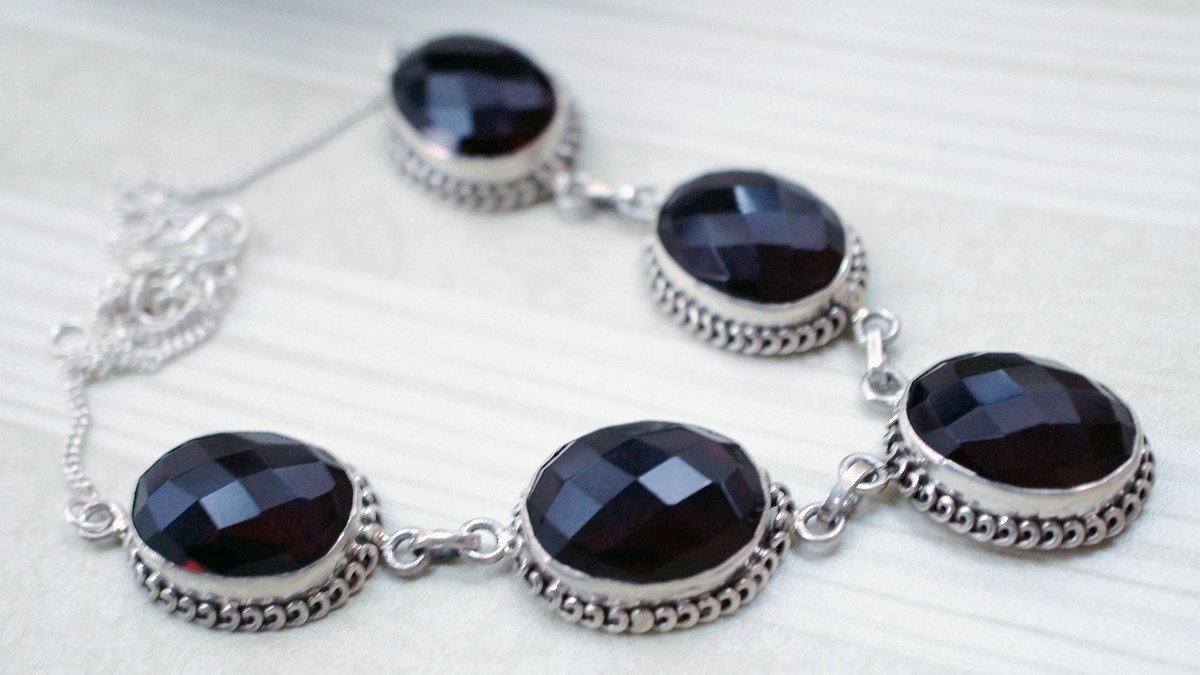
Before a single tool is picked up, there is a conversation between the metal and the stone. A jeweller will often start with the gemstone itself — a rose-cut moonstone, a baguette of London blue topaz, a speckled moss agate — and work backwards to a design that flatters its colour and cut. Sketches are made at full size, because a ring shank that looks elegant on paper at twice scale can feel clumsy on the finger. At this stage the practical questions matter: how high will the setting sit, will it catch on a jumper sleeve, and does the stone need a protective bezel or can it be held with slender claws?
Once the design is settled, a technical drawing or a wax model follows. Many makers carve wax by hand, shaping it until the proportions feel right, then send it for casting. Others work directly in metal, sawing a sheet of silver or gold and building the piece up from there. Both routes are slow, and both leave room for the small irregularities that tell you a human being made the thing.
The metal you wear matters as much as the stone you look at. Most artisan studios now work primarily in recycled sterling silver, which carries the same 925 hallmark as newly mined silver but comes from reclaimed jewellery, industrial scrap and old silverware. The refining process is well established and the result is indistinguishable in quality.
For gold, look for Fairmined or Fairtrade certified metal where possible. Small-scale miners are paid a fair price and supported with training, and the gold is traceable back to the community that dug it. Nine carat gold is harder and more affordable, which makes it a sensible choice for everyday rings; eighteen carat is richer in colour and softer, better suited to pendants and earrings.
The bench is where the piece takes shape. A jeweller's saw, loaded with a blade finer than a human hair for delicate work, cuts the metal sheet to the outline drawn on it. Files smooth the edges; emery paper in gradually finer grits removes the scratches left behind. If the design calls for a curve — a band, a hoop, a bangle — the metal is annealed with a torch until it glows, then bent while soft and quenched in water.
Soldering is the most nerve-wracking step. Each join is fluxed, a tiny pallion of solder is placed, and the flame is played over the whole piece until the solder flows. Too much heat and the previous joins melt; too little and the seam fails. A single ring may pass through the flame a dozen times before it is complete.
Setting is the step that cannot be rushed. In a bezel setting, a strip of metal is shaped around the stone and pushed over its edges with a burnisher, holding it snugly and protecting it from knocks. In a claw setting, four or six wires are raised and filed to fit the curve of the stone, then tightened one by one with pliers. A well-set stone sits level and tight, and does not rattle when you tap it gently against your palm.
This is also when a maker will notice flaws that only appear under magnification — a tiny chip on the girdle, an uneven facet, a colour that shifts in daylight. It is far better to find these things now than after the piece has been polished and boxed.
Polishing transforms dull, scratched metal into something that glows. The piece is worked through a series of mops charged with different compounds — a coarse cut first, then a finer one, and finally rouge for a mirror finish. A matt or brushed finish is achieved with a satin wheel or a fine abrasive pad, and many makers combine the two finishes.
In the UK, any piece of silver or gold over the legal weight threshold must be sent to an assay office to be tested and hallmarked. The hallmark tells you the metal's purity, the assay office, and the maker's mark — a small signature that ties the piece to the person who made it. Once it returns, the stone is checked again, the clasp or catch tested, and the piece cleaned before it is wrapped.
A handcrafted piece works hardest when you let it lead. If your pendant is a bold cabochon stone, keep the neckline simple and skip the statement earrings. If you wear a delicate stacking ring, group it with two or three others of differing textures — a hammered band, a thin twisted one, a plain court shape — and let them move.
Look after a piece and it will outlast the trend that inspired it. Clean silver with a soft cloth and warm soapy water, take rings off before gardening or swimming, and bring a loose stone to a jeweller as soon as you notice any movement. The care you give it is the last stage of the making.

Hi, my name is Anthony kuber. I am artist and fashion designer.
I love to travel and writing blogging.
Your email address will not be published. Required fields are marked *
Software Developer & Writer
Hey, I'm Diva, a developer and writer blending code and creativity. I'm driven by a deep curiosity and a relentless pursuit of excellence. Join me as I craft digital solutions and captivating stories.


